You can set up your email account on your iPhone or iPad in two ways – automatically or manually. This guide covers both, plus the exact server settings and a common warning message you may see along the way.
Quick reference – server settings
Incoming (IMAP): mail.yourdomain.com, port 993, SSL/TLS on
Outgoing (SMTP): mail.yourdomain.com, port 465, SSL/TLS on
Username: your full email address (e.g. johndoe@yourdomain.com)
For POP3 and non-SSL ports, see Set Up Mail Client.
Automatic setup
- Open Settings (or Settings > Apps > Mail on iOS 18+)
- Tap Mail
- Tap Accounts (or Mail Accounts on iOS 18+)
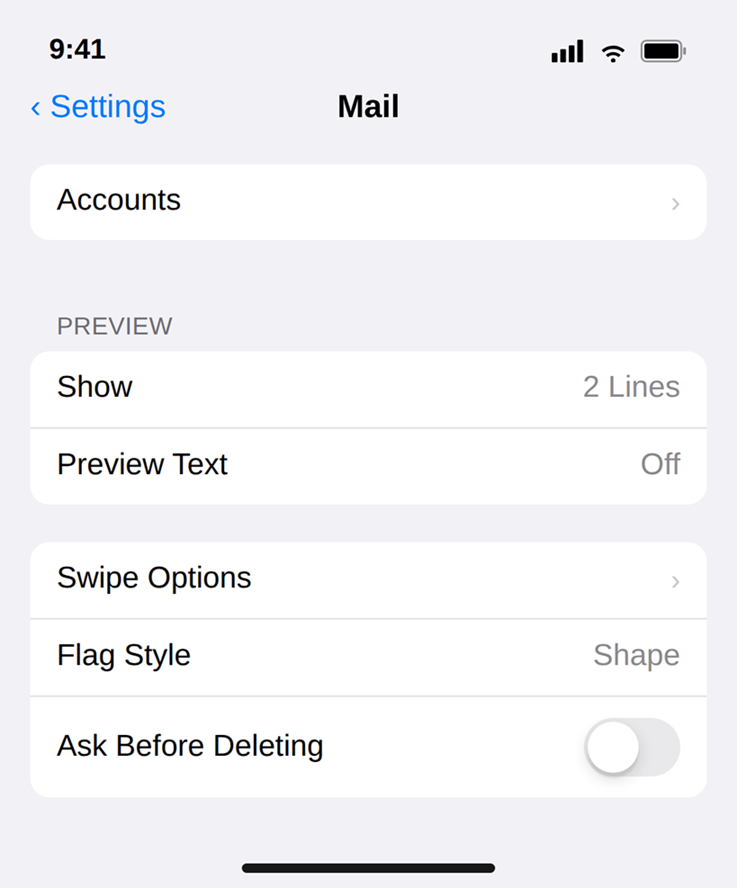
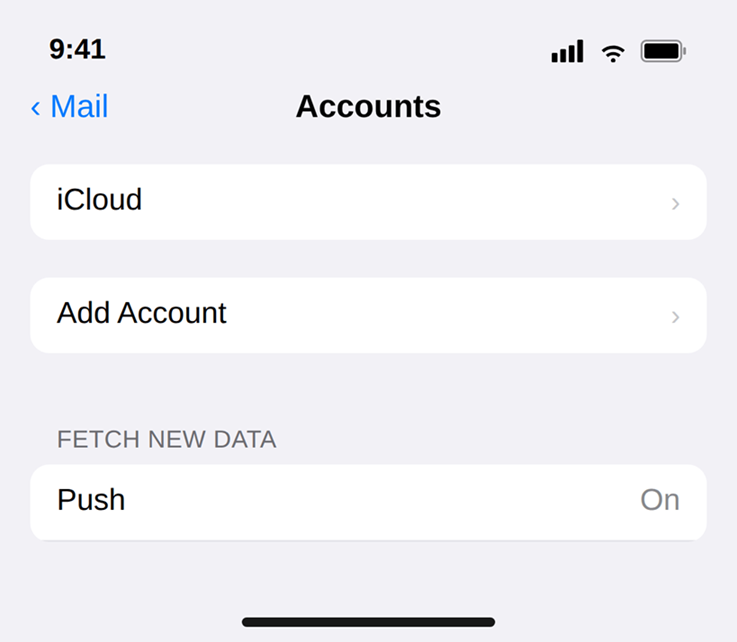
- Tap Add Account
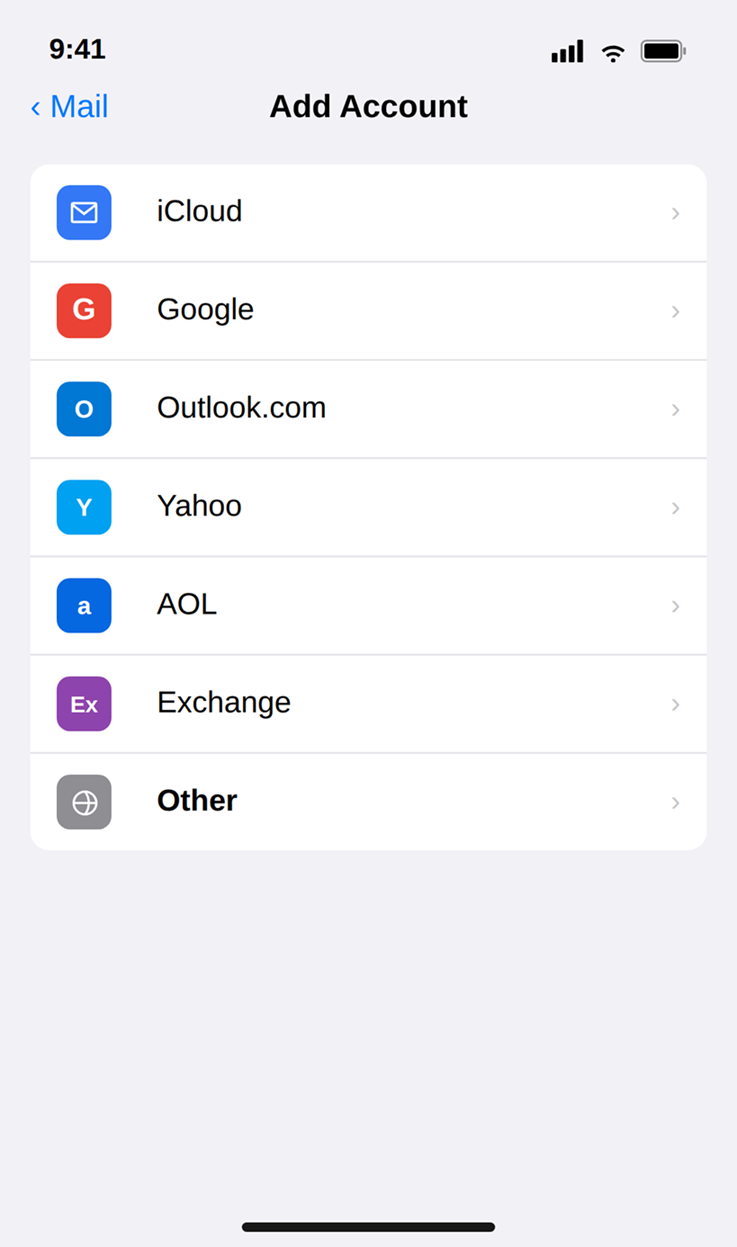
- Tap Other
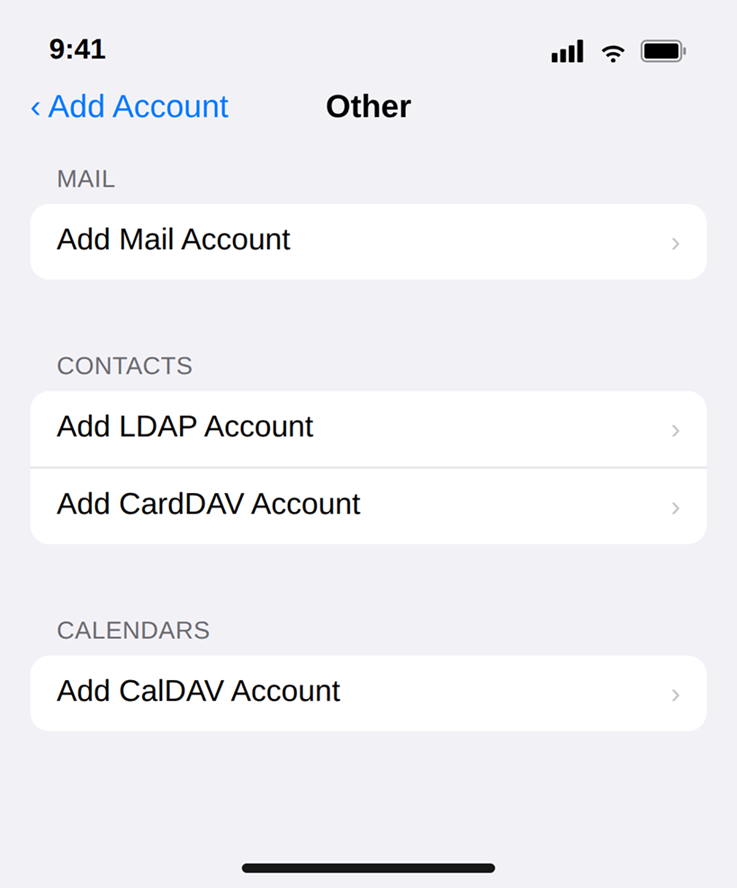
- Under Mail, tap Add Mail Account
- In the Name field, enter the name that will be shown on outgoing emails
- In the Email field, enter your full email address
- In the Password field, enter your email account password
- In the Description field, enter a name for this account (this is only shown on your device)
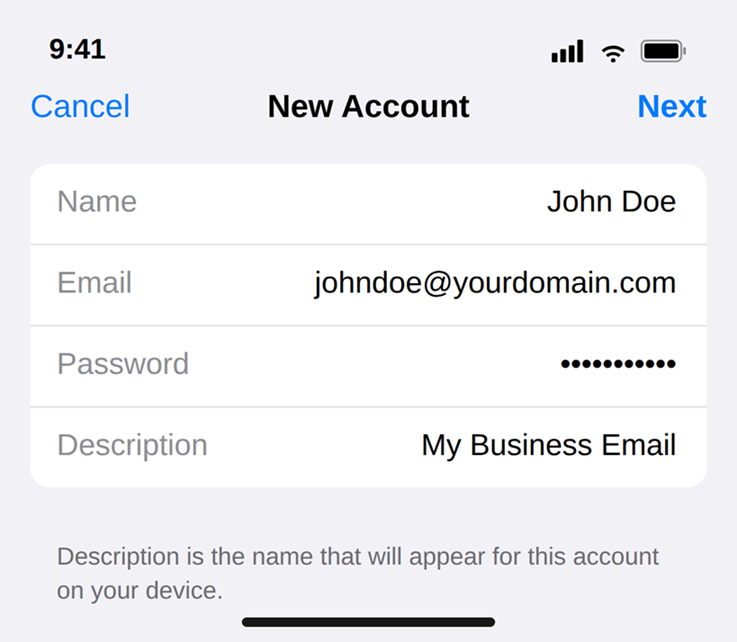
- Tap Next
- Mail will try to find your settings automatically and finish setting up the account
- Tap Done
If Mail cannot find your settings automatically, continue with the manual steps below.
Manual setup
If the app could not create the account automatically, go back and set it up manually:
- Tap Next after entering your name, email and password
- Choose IMAP (recommended) or POP
- Under Incoming Mail Server:
- Host Name: mail.yourdomain.com (replace yourdomain.com with your own domain)
- User Name: your full email address, e.g. johndoe@yourdomain.com
- Password: your email account password
- Under Outgoing Mail Server:
- Host Name: mail.yourdomain.com (replace yourdomain.com with your own domain)
- User Name: your full email address, e.g. johndoe@yourdomain.com — mandatory, even though iOS shows "(Optional)"
- Password: your email account password — mandatory, even though iOS shows "(Optional)"
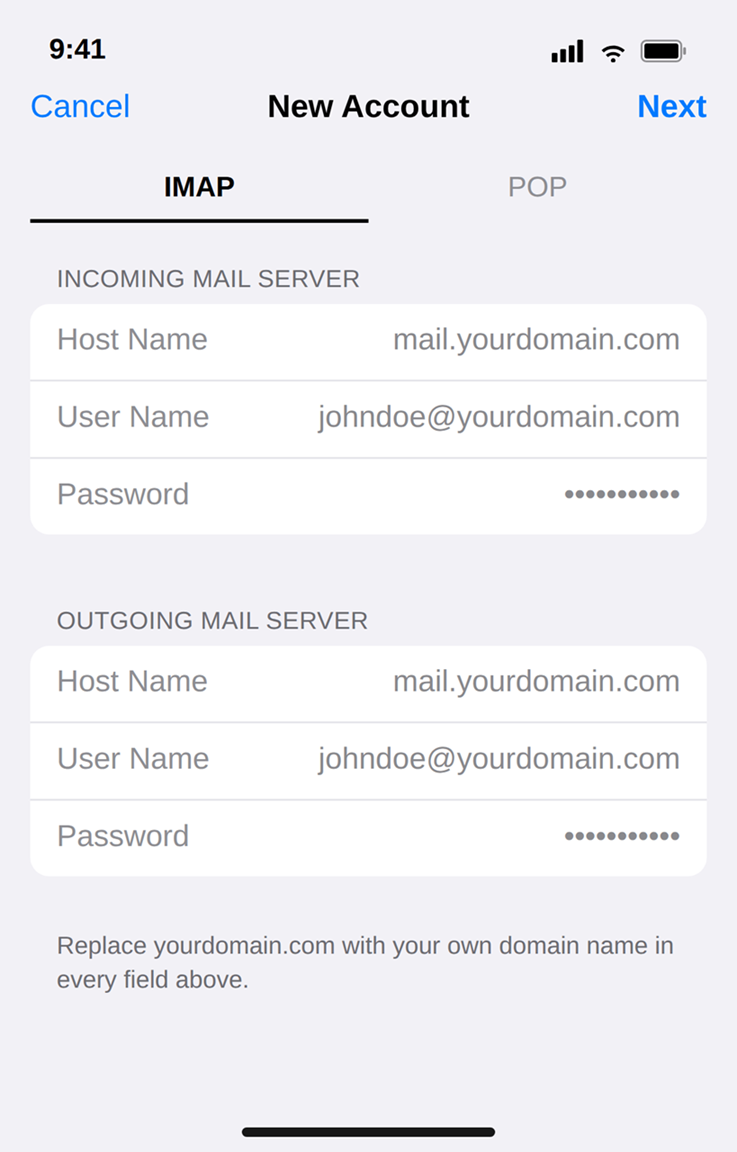
Note on ports and SSL: The iPhone Mail app does not show port fields on this screen – it selects the correct port automatically once SSL is turned on for each server (this happens on the next screen, or under Advanced settings for the account). Make sure SSL is enabled for both incoming and outgoing servers. If you need to set the port manually in another mail app, use 993 for IMAP and 465 for SMTP.
- Tap Next
- If your information is correct, tap Save
"Cannot Verify Server Identity" warning
You may see a warning saying the identity of mail.yourdomain.com cannot be verified. This happens because the SSL certificate on our mail server is issued to the server's own hostname rather than to your specific domain – it does not mean your connection is insecure.
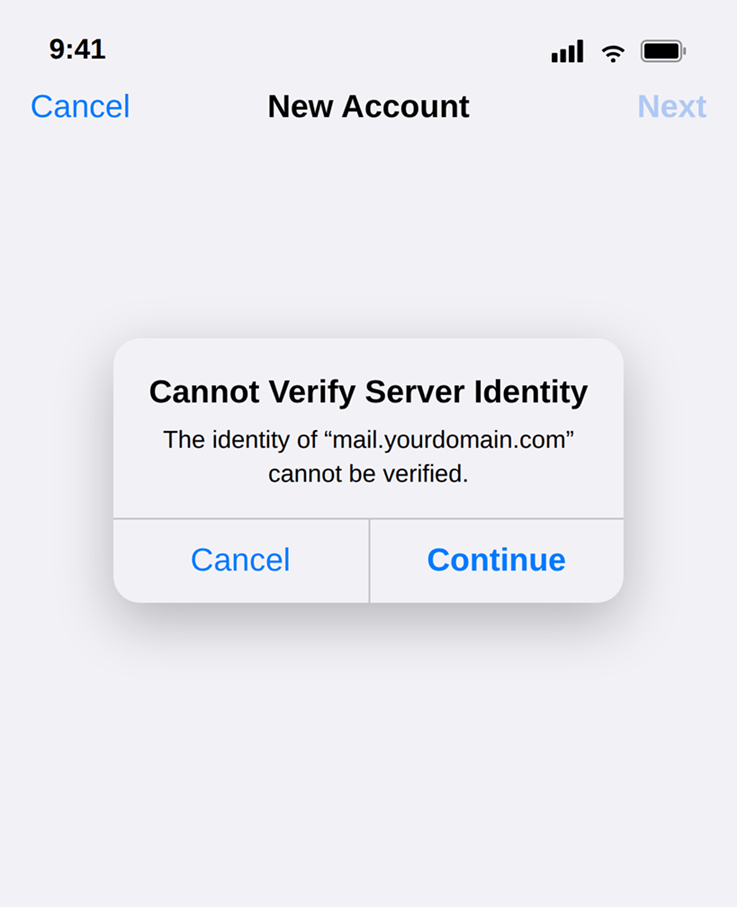
Tap Continue (or Details > Trust) to proceed with the setup. Alternatively, you can use the main server hostname provided in your cPanel welcome email as the Host Name. Your email traffic is still encrypted.
A note on iCloud Private Relay and Hide My Email
If you use Hide My Email to generate a random alias, that alias only works with your iCloud Mail account – it cannot be used as the address for an external (cPanel-hosted) email account like the one set up in this guide. Make sure you enter your real @yourdomain.com address, not an iCloud alias.
Related article: Set Up Mail Client for the full list of ports and settings for all mail clients.